The hobby that costs $18 (or less) and changes how you see everything
On celebrity memoirs, late-night reading, and why other people’s stories make us braver about our own.
I didn’t set out to become a celebrity memoir person. But somewhere between hectic school day mornings and the dinner rushes and the endless mental load of keeping two small humans alive and thriving, I found myself desperately needing something that was just mine.
Not a wellness routine. Not a productivity hack. Just a book, a quiet corner and twenty minutes that belonged to nobody else.
And yes, I know how these books get made. Most celebrity memoirs are collaborations: a co-writer in a room somewhere, hours of recorded conversations, a skilled journalist or author shaping raw memory into narrative. That’s not a secret, and it’s not a criticism. What it actually means is that there’s a whole craft behind taking someone’s lived experience and turning it into something readable, honest and useful. Knowing that doesn’t make the stories less true. If anything, it makes me appreciate when the result still feels raw and unfiltered because that’s a choice someone made deliberately, even with help.
Why memoirs, why now
There’s something that shifts in midlife about how you consume stories. In my twenties I wanted fiction for the escape, imagination, possibility. Now I want to know what actually happened. I want the real version. I want to read about someone sitting in the rubble of a decision they made and figuring out how to walk out of it. That’s not morbid. That’s useful.
Celebrity memoirs specifically scratch an itch I didn’t know I had: they take people we think we already know and make them human-sized again. The parasocial relationship gets inverted. Suddenly you’re not watching them, you’re sitting across a table from them. And somehow, that makes you feel less alone in your own mess.
Reading after the kids go to bed has become my version of therapy, creative refueling and quiet rebellion all at once. It tells my brain: this hour is mine. That boundary, as small as it sounds, changes everything about how I show up the next morning.
The ones that stayed with me
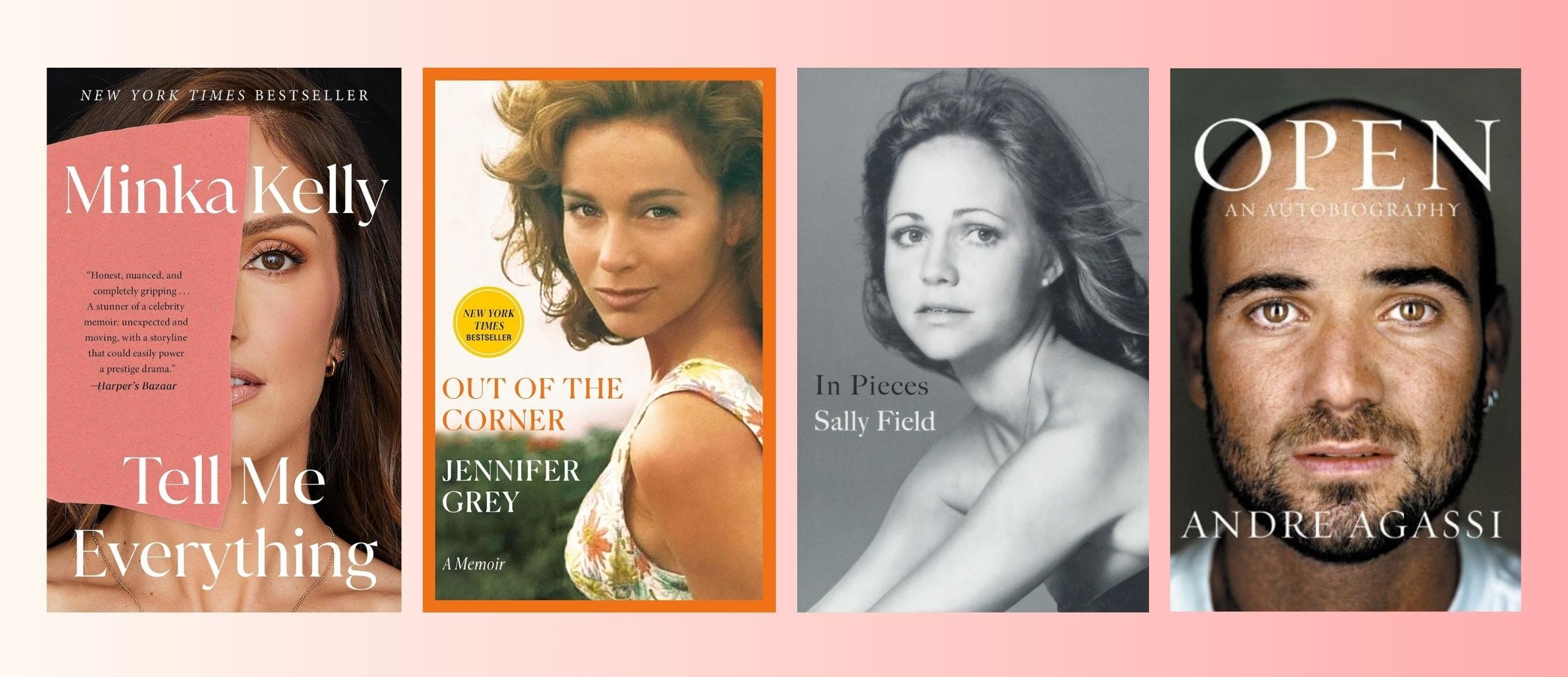
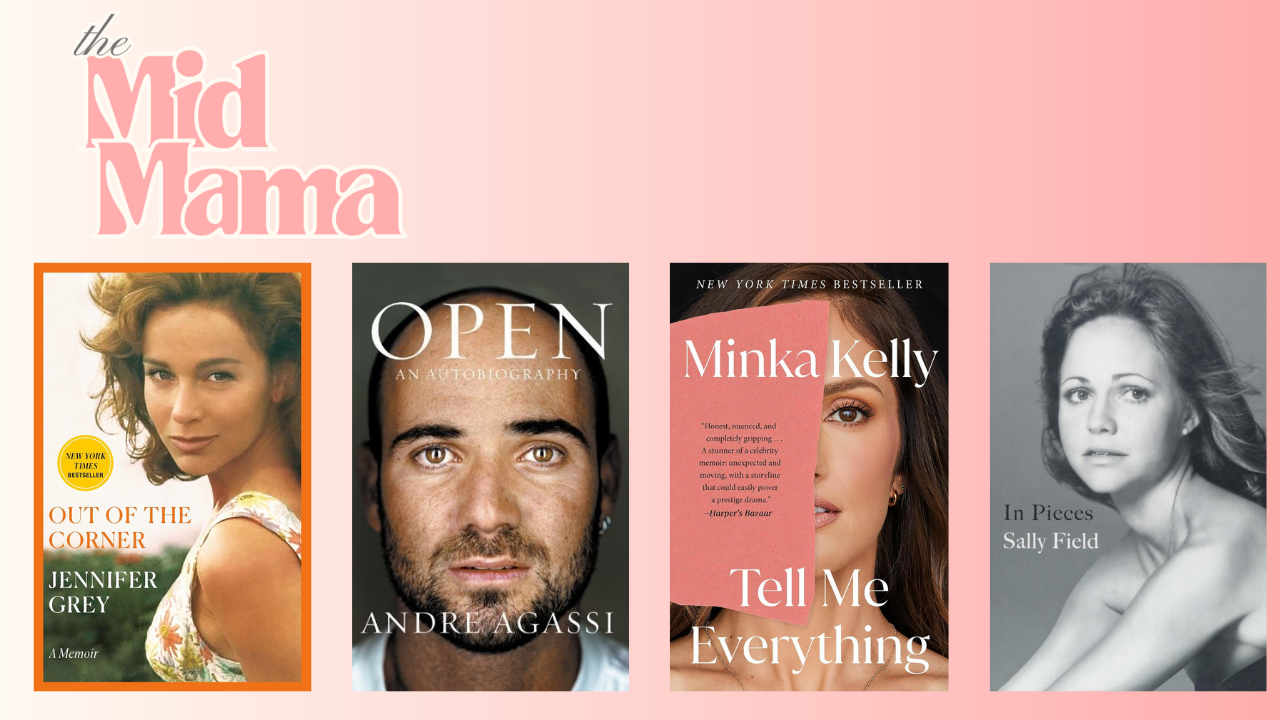
Minka Kelly’s Tell Me Everything: A Memoir stopped me cold. I wasn’t prepared for the level of honesty, the specificity of the hardship, the complete lack of self-pity. She didn’t write the version that protects her image. She wrote the version that might help someone else, and you can feel the difference on every page.
Jennifer Grey’s Out of the Corner: A Memoir was quietly devastating in the best way — a woman reckoning with an industry that made her feel like her face was her only currency, and what happened when she changed it. As someone who thinks a lot about beauty and identity in midlife, I couldn’t put it down.
Sally Field gave me the book I think women of a certain generation needed and never got with In Pieces. She is unflinching about her relationships (especially the one with Burt Reynolds), her career, her mother, her sense of self. It reads like a woman who finally stopped editing herself, and that energy is completely contagious.
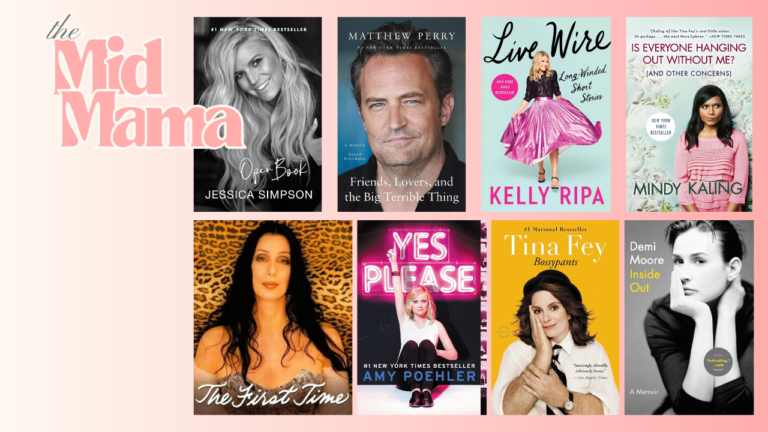
Andre Agassi’s Open: An Autobiography is genuinely one of the best memoirs I’ve ever read full stop, not just in this genre. The fact that one of the greatest tennis players of all time hated tennis is almost secondary to what the book is really about: performing a version of yourself for decades until you don’t know who’s underneath. If you haven’t read it, clear your weekend.
Currently on my nightstand
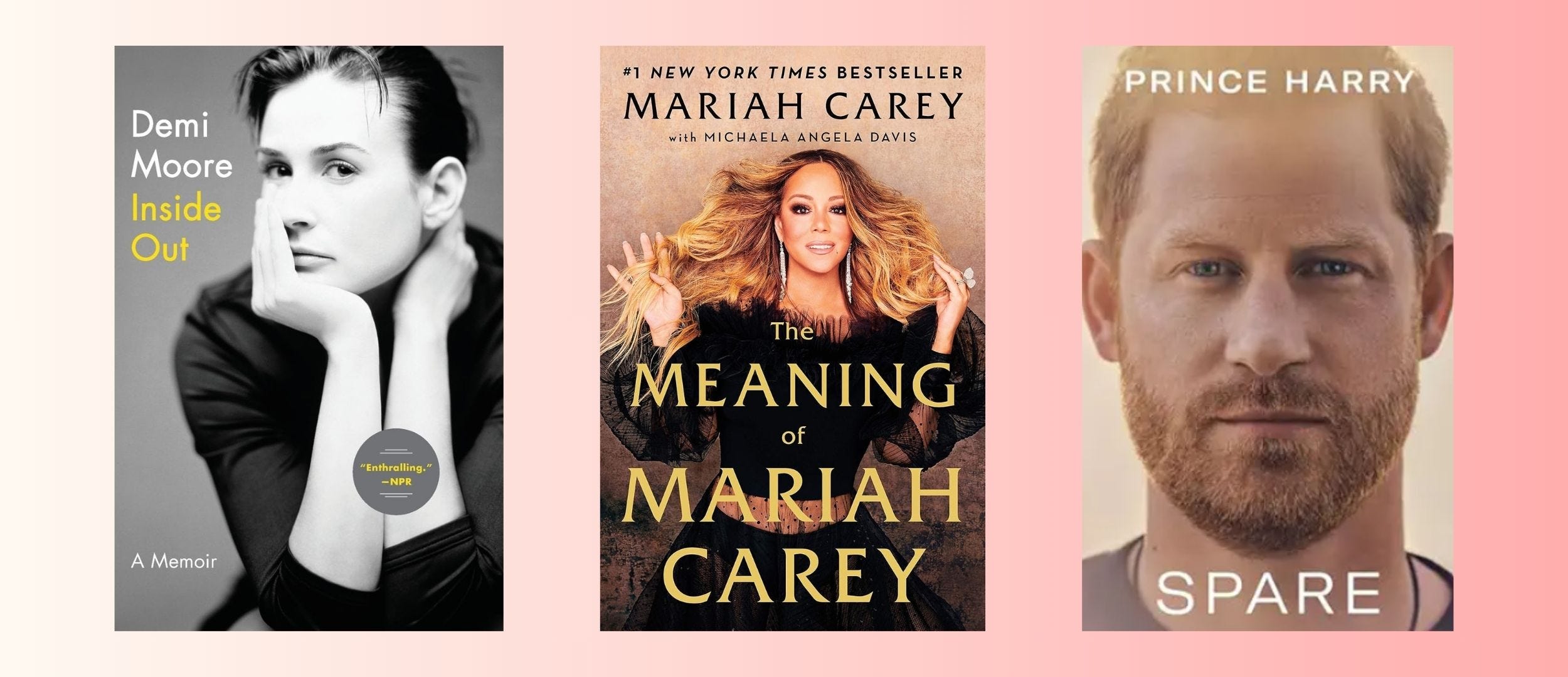
Demi Moore’s Inside Out: A Memoir. I’m not finished, but I’m already struck by her willingness to sit in discomfort without rushing to the redemption arc. So many memoirs are structured as tidy before-and-afters. Hers feels messier and more honest than that, which, for my money, is always the more interesting read.
A word on the ones that almost worked
Mariah Carey’s memoir, The Meaning of Mariah Carey, is a triumph of voice. Nobody writes like Mariah talks, and that’s either delightful or exhausting depending on your patience level. Mine ran out around page 300. It’s long. Wonderfully, unapologetically long, in the way that Mariah herself is wonderfully unapologetic. I liked it. I also needed a nap.
Prince Harry’s Spare was believable. I believed him. The pain is real, the love for his wife and his mother is real, and some of what he describes about life inside that institution is genuinely illuminating. But there are passages that read less like truth-telling and more like score-settling, and the difference between those two things matters. When a memoir is at its best it makes you feel for the person even when they’re flawed. When it slips into pettiness, it makes you feel vaguely uncomfortable for them instead, like watching someone say something they’ll regret.
Why this hobby matters more than it sounds
Here’s what nobody tells you about finding time for yourself in the middle of raising young kids: it doesn’t have to be big. It doesn’t have to be a spa day or a girls’ weekend or an hour of uninterrupted yoga. Sometimes it’s twenty minutes with a book that reminds you that you are a whole, complex, interesting person outside of the roles you carry.
When you read someone else’s honest account of navigating identity, reinvention, beauty, loss, ambition — you are quietly doing the work on your own story at the same time. You’re finding language for things you haven’t been able to say yet. You’re borrowing someone else’s courage until yours shows up.
For women in the middle of their own in-between — whoever you are, whatever season you’re in — I think memoir might be the most underrated form of self-care we have.
It’s also $18 (or less than five bucks if you go to Goodwill like I do) and fits in your bag. As hobbies go, it’s a deal.
What’s on your nightstand right now? Tell me in the comments — I’m always taking recommendations.
Leave a Reply